
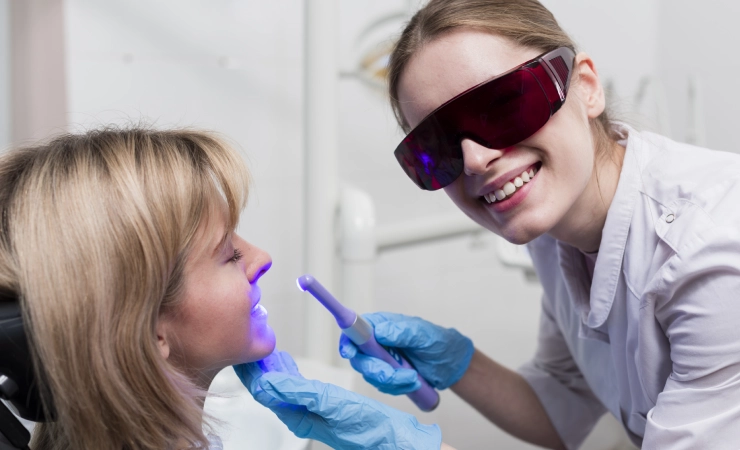
Professional teeth whitening is a cosmetic option that may lighten some types of natural-tooth staining. Results vary, whitening does not change the colour of every dental material, and it is not suitable for every patient. A dental assessment helps determine whether whitening is appropriate and what result is realistic.
Why do teeth become discoloured?
Teeth can darken or develop stains for many reasons. Coffee, tea, red wine and tobacco can contribute to surface staining. Age, tooth development, previous injury, medications and changes inside a tooth may also affect colour. The cause matters because different stains respond differently to whitening.
What happens before professional whitening?
A dentist should assess your teeth and gums before recommending treatment. Cavities, cracked teeth, gum irritation, exposed roots or significant sensitivity may need attention first. The examination can also identify restorations such as fillings, crowns or veneers that will not whiten like natural enamel.
Your dentist can discuss:
- whether the staining is likely to respond;
- possible sensitivity or gum irritation;
- existing restorations that may remain a different shade;
- the treatment method and expected timeline;
- alternatives when whitening is unlikely to help; and
- realistic expectations for your individual situation.
Professional and store-bought products
Whitening products differ in their ingredients, strength and instructions. Store-bought products may be appropriate for some people when used exactly as directed, but they cannot diagnose the cause of discolouration. Professional care allows the dental team to assess oral health, discuss suitability and monitor concerns such as sensitivity.
Using more product, leaving it on longer than directed or combining several whitening products can increase irritation without producing a predictable improvement. Ask a dental professional if you are unsure whether a product is suitable.
Possible side effects
Temporary tooth sensitivity and gum irritation are common concerns. The likelihood and intensity vary. Tell the dental team if you already have sensitive teeth, exposed roots, gum recession or previous reactions to whitening products. Treatment may need to be adjusted, delayed or avoided.
How long do results last?
There is no guaranteed duration. Diet, tobacco use, oral-hygiene habits, the original cause of staining and individual tooth characteristics can all affect how the colour changes over time. Maintenance recommendations should be individualized, and repeated whitening should not be performed more often than advised.
Who should ask for additional advice?
People who are pregnant or breastfeeding, have untreated dental disease, extensive restorations, severe sensitivity or a history of reactions should discuss their circumstances with an appropriate health or dental professional before whitening. A single dark tooth, especially after trauma, needs assessment because whitening may not address the underlying cause.
Discuss teeth whitening at our Ottawa clinic
Ottawa Smiles Family Dental provides general dental assessments and professional whitening options at 1935 Bank Street. Learn more about our teeth-whitening service.
Call 613-520-0222 or request an appointment online. For general information about the Canadian Dental Care Plan and possible patient costs, see our 2026 CDCP guide. Cosmetic whitening may not be covered.